<?xml version="1.0" encoding="utf-8"?>
<feed xmlns="http://www.w3.org/2005/Atom">
   <title>Mohsen Sazegara</title>
   <link rel="alternate" type="text/html" href="http://www.sazegara.net/english/ /" />
   <link rel="self" type="application/atom+xml" href="http://www.sazegara.net/english/ /atom.xml" />
   <id>tag:www.sazegara.net,2011:/english/ /4</id>
   <updated>2011-02-11T07:02:34Z</updated>
   <subtitle>Mohsen Sazegara - Mohsen Sazegara&apos;s Personal Website including articles, news links, photos and others&apos; prospects.</subtitle>
   <generator uri="http://www.sixapart.com/movabletype/">Movable Type 3.33</generator>

<entry>
   <title>From Egypt to Iran? Ideas in Action TV</title>
   <link rel="alternate" type="text/html" href="http://www.sazegara.net/english/ /archives/2011/02/from_egypt_to_iran_ideas_in_ac.html" />
   <id>tag:www.sazegara.net,2011:/english/ //4.2722</id>
   
   <published>2011-02-10T07:00:32Z</published>
   <updated>2011-02-11T07:02:34Z</updated>
   
   <summary>http://www.ideasinactiontv.com/episodes/2011/02/from-egypt-to-iran.html...</summary>
   <author>
      <name></name>
      <uri>adminsazegara</uri>
   </author>
         <category term="Interviews" scheme="http://www.sixapart.com/ns/types#category" />
   
   
   <content type="html" xml:lang="en" xml:base="http://www.sazegara.net/english/ /">
      <![CDATA[<a href="http://www.ideasinactiontv.com/episodes/2011/02/from-egypt-to-iran.html">http://www.ideasinactiontv.com/episodes/2011/02/from-egypt-to-iran.html</a>

<embed src="http://c.brightcove.com/services/viewer/federated_f8/933850474" bgcolor="#FFFFFF" flashVars="videoId=781778975001&playerId=933850474&viewerSecureGatewayURL=https://console.brightcove.com/services/amfgateway&servicesURL=http://services.brightcove.com/services&cdnURL=http://admin.brightcove.com&domain=embed&autoStart=false&" base="http://admin.brightcove.com" name="flashObj" width="486" height="412" seamlesstabbing="false" type="application/x-shockwave-flash" swLiveConnect="true" pluginspage="http://www.macromedia.com/shockwave/download/index.cgi?P1_Prod_Version=ShockwaveFlash"></embed>]]>
      
   </content>
</entry>
<entry>
   <title>BBC World Service: Witness - Revolution in Iran</title>
   <link rel="alternate" type="text/html" href="http://www.sazegara.net/english/ /archives/2011/02/bbc_world_service_witness_revo.html" />
   <id>tag:www.sazegara.net,2011:/english/ //4.2723</id>
   
   <published>2011-02-06T07:03:53Z</published>
   <updated>2011-02-11T07:08:31Z</updated>
   
   <summary>www.bbc.co.uk/iplayer/episode/p00d873t/Witness_Revolution_in_Iran The first week of February 1979 saw a revolution unfolding in Iran. After the Shah had left, and Ayatollah Khomeini had arrived back in the country, it was only a matter of time before the Islamic revolution in Iran...</summary>
   <author>
      <name></name>
      <uri>adminsazegara</uri>
   </author>
         <category term="Interviews" scheme="http://www.sixapart.com/ns/types#category" />
   
   
   <content type="html" xml:lang="en" xml:base="http://www.sazegara.net/english/ /">
      <![CDATA[<a href="http://www.bbc.co.uk/iplayer/episode/p00d873t/Witness_Revolution_in_Iran">www.bbc.co.uk/iplayer/episode/p00d873t/Witness_Revolution_in_Iran</a>

<embed width="512" height="323" allowfullscreen="true" allowscriptaccess="always" wmode="default" quality="high" flashvars="embedReferer=&amp;embedPageUrl=http%3A%2F%2Fwww.bbc.co.uk%2Fiplayer%2Fepisode%2Fp00d873t%2FWitness_Revolution_in_Iran&amp;config_settings_showPopoutButton=true&amp;config_settings_showPopoutCta=true&amp;config_settings_suppressRelatedLinks=true&amp;domId=emp&amp;config=http%3A%2F%2Fwww.bbc.co.uk%2Fiplayer%2Fconfig%2Femp%2F&amp;playlist=http%3A%2F%2Fwww.bbc.co.uk%2Fiplayer%2Fplaylist%2Fp00d873t%2F&amp;holdingImage=http%3A%2F%2Fnode2.bbcimg.co.uk%2Fiplayer%2Fimages%2Fepisode%2Fp00d873t_512_288.jpg&amp;config_settings_bitrateFloor=0&amp;config_settings_bitrateCeiling=2500&amp;config_messages_diagnosticsMessageBody=undefinedTry%20our%20diagnostics%20page.&amp;config_settings_language=en&amp;guidance=unknown" id="bbc_emp_embed_emp" src="http://www.bbc.co.uk/emp/10player.swf?revision=18269_21576" type="application/x-shockwave-flash">

The first week of February 1979 saw a revolution unfolding in Iran.

After the Shah had left, and Ayatollah Khomeini had arrived back in the country, it was only a matter of time before the Islamic revolution in Iran was complete.

Mohsen Sazegara was at the heart of those changes - he talks to Witness.]]>
      
   </content>
</entry>
<entry>
   <title>Panel on the State of the Green Movement, from &quot;Iran: Prospects for Regime Change&quot;</title>
   <link rel="alternate" type="text/html" href="http://www.sazegara.net/english/ /archives/2010/04/panel_on_the_state_of_the_gree.html" />
   <id>tag:www.sazegara.net,2010:/english/ //4.2151</id>
   
   <published>2010-04-14T05:54:13Z</published>
   <updated>2010-04-14T06:21:53Z</updated>
   
   <summary>Foreign Policy Initiative http://www.foreignpolicyi.org/node/17057...</summary>
   <author>
      <name></name>
      <uri>adminsazegara</uri>
   </author>
         <category term="Interviews" scheme="http://www.sixapart.com/ns/types#category" />
   
   
   <content type="html" xml:lang="en" xml:base="http://www.sazegara.net/english/ /">
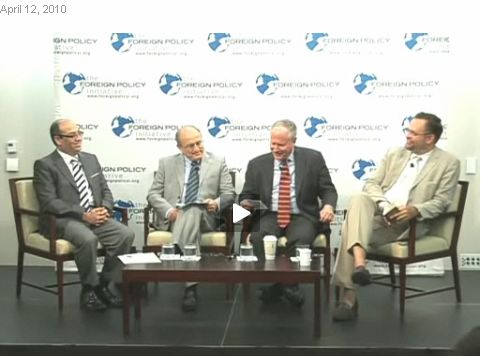
      <![CDATA[Foreign Policy Initiative

<a href="http://www.foreignpolicyi.org/node/17057">http://www.foreignpolicyi.org/node/17057<br><img src="/images/2010/foreignpolicyi_20100412.jpg"></a>


]]>
      
   </content>
</entry>
<entry>
   <title>Challenging Iran, With YouTube Views</title>
   <link rel="alternate" type="text/html" href="http://www.sazegara.net/english/ /archives/2010/04/challenging_iran_with_youtube.html" />
   <id>tag:www.sazegara.net,2010:/english/ //4.2146</id>
   
   <published>2010-04-11T22:42:22Z</published>
   <updated>2010-04-11T23:35:15Z</updated>
   
   <summary>The Saturday Profile http://www.nytimes.com/2010/04/10/world/middleeast/10sazegara.html “We should learn to oppose the regime, how to paralyze them, how to wear them out, but not to be killed, not to be arrested.” Mohsen Sazegara By NEIL MacFARQUHAR Published: April 9, 2010 VIENNA, Va....</summary>
   <author>
      <name></name>
      <uri>adminsazegara</uri>
   </author>
         <category term="Interviews" scheme="http://www.sixapart.com/ns/types#category" />
   
   
   <content type="html" xml:lang="en" xml:base="http://www.sazegara.net/english/ /">
      <![CDATA[The Saturday Profile
<a href="http://www.nytimes.com/2010/04/10/world/middleeast/10sazegara.html">http://www.nytimes.com/2010/04/10/world/middleeast/10sazegara.html</a>


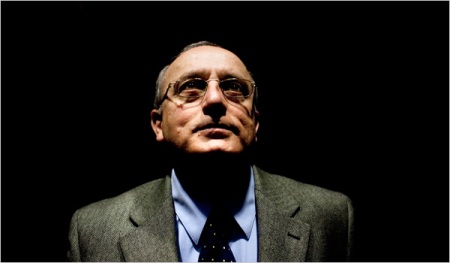
<img src="/images/nytimes/nytimes20100410.jpg">

“We should learn to oppose the regime, how to paralyze them, how to wear them out, but not to be killed, not to be arrested.”
Mohsen Sazegara
By NEIL MacFARQUHAR
Published: April 9, 2010


VIENNA, Va. 

MOHSEN SAZEGARA recognizes that nonviolent protest is a tough sell for most Iranians, given that bloodshed is a part of both their long history and their faith.

But Mr. Sazegara ticks off a couple points in its favor. First, the Islamic Republic has disenchanted a wide section of the population. Second, he believes that Iranians harbor a mystic tradition that could be channeled into the kind of nonviolent tide of dissent that bends history.

<a href="http://video.nytimes.com/video/2010/04/09/world/middleeast/1247467576992/mohsen-sazegara.html?ref=middleeast" ><img src="/images/nytimes/nytimes20100410_video.jpg"><br>Video</a>

This, by the way, comes from one of the architects of the Revolutionary Guards, the military spine of the government.

“In Shiism, we always talk about blood, about sacrificing your blood,” he said over tea and sohan, flat candy concocted from pistachios and saffron. Like most invariably long conversations with an Iranian intellectual, this one winds around to Rumi, a celebrated 13th century poet and theologian. “The ideas of some mystic like Rumi is based on love, is based on loving everybody, to be kind with everybody,” he said.

Trying to supplant martyrdom with mysticism, and boiling the ideas down into the 10-minute videos he beams into Iran nightly, has been Mr. Sazegara’s quest since anti-government riots erupted in Tehran last June over the widespread sentiment that the presidential election had been rigged.

Mr. Sazegara, 55, who makes frequent appearances on Voice of America’s Persian language News Talk, is trying to bring down the system he helped create. When the protests first erupted, with demonstrators turning to him in droves for guidance on confronting the government on the streets of Tehran and other cities, it sometimes seemed as if he might inspire an entire new movement.
]]>
      Thirty-two years ago, he was studying physics at the Illinois Institute of Technology in Chicago when he got a call saying Ayatollah Ruhollah Khomeini needed him in Paris. He was there by 9 a.m. the next day, going to work as a press aide.

That led to a series of other jobs, including helping to draft the memo to create the Islamic Revolutionary Guards Corps. He headed the state radio. He led a sprawling government-owned industrial conglomerate, and served as a deputy prime minister for political affairs. But along the way doubts began to gnaw, so he left the government in 1989 to spend three years re-reading the books written by various revolutionary patriarchs.

“It goes back to the theory of the Islamic Republic,” said Mr. Sazegara, a short man with thinning white hair whose ideas spill out in fluent, if occasionally choppy, English. “The problems are not accidental; they are essential. It doesn’t make any difference who are the people. It is the structure.”

It took another decade for him to swing around 180 degrees and agitate against the Islamic Republic, eventually founding several opposition newspapers. The government shuttered each in turn. He was thrown into Evin prison four times, twice in the 1980s and twice in 2003 after he wrote an open letter implying that the supreme leader was a dictator. After his last, nearly four-month stint, he chose exile in January 2004 with his wife and two grown sons.

In the basement of his faux colonial town house here, Mr. Sazegara is updating a ploy from Ayatollah Khomeini’s playbook on overthrowing the despotic Shah. The cleric dispatched jeremiads via cassette tape that spread throughout Iran. Mr. Sazegara lacks the same stature, but he records nightly videos about opposing the Iranian government that are flung out into cyberspace through YouTube, Facebook and his own Web site.

THE broadcasts were born of frustration. Mr. Sazegara is a regular Friday commentator on the Voice of America show. When they barred him from encouraging the post-election protests on the air, he quit briefly, then turned to YouTube.

He has broadcast virtually every night since June 25, making the transition from a borrowed camera and a stiff manner to dashing off short versions with his laptop while traveling.

“Our strategy is nonviolence, so we should learn how to protest but not to be killed,” he said. “We should learn to oppose the regime, how to paralyze them, how to wear them out, but not to be killed, not to be arrested.”

Two important lessons he says he took from the 1979 revolution were that elevating only one leader is likely to lead to dictatorship, and that arming everyone only brings bloodshed.

Gauging his impact is difficult. Combining some 26,600 fans of his various Facebook pages, uneven hits on YouTube and his own Web page, he claims to reach 300,000 to 500,000 people inside Iran. But his YouTube numbers have fallen recently, with some videos getting zero views compared with the 55,441 for his first post.

Iran analysts said that in the beginning he fed a real hunger for basic lessons in protesting. But as the killings, arrests and torture mounted, a backlash developed.

“Our people are still in jail,” a viewer inside Iran identified as Nahid Haddidi commented on one of his posts in March. “They are being executed, they are being sacrificed. Why? How can they decide for us from outside the country, and what is going to happen to all these people in jail?”

Mr. Sazegara turns slightly defensive on this point, saying he is not trying to lead the protest movement, only amplify what he harvests from myriad contacts inside Iran.

HE does not lack for critics among the diaspora, for whom he is something of a lightning rod. Royalists find him insufficiently contrite for helping spawn the 1979 revolution, especially its initial wave of executions.

Some critics accuse him of encouraging a military attack on Iran through his links to groups they say push war, in particular the Washington Institute for Near East Policy. He is blamed for providing ammunition for government accusations that the protests are a foreign plot. Some say he is out of tune with the current generation, trying to rewrite his own 1979 revolution rather than to address current issues.

Mr. Sazegara brushes it off. He has acknowledged past mistakes, he said. He says he opposes any military action against Iran.

Even those who question his wider impact admire that he tends to drive the government crazy. It mobilizes a large security presence whenever he mentions a particular protest venue, said one political organizer, speaking anonymously because he wanted to travel back to Iran.

Fans find him accessible, down to earth and providing a much needed boost to Iranians who think their cause is being forgotten.

For a typical recording in his basement, he stands in front of a green felt backdrop — the color of Iran’s protest movement — and a line of Persian poetry that reads “Green means resistance until spring.” He interprets it as suggesting that patient protest will eventually blossom into real change.

He starts by rattling off half a dozen of the day’s headlines involving Iran. Iranians, he said, are desperate for independent news sources. Then he breaks into a lesson. He is mad for numbered lists: the six most frequently asked questions about the Green movement; the four main roots of the protest movement; the three ways to grow the movement.

Among those frequently asked questions, of course, is when and if the Green movement can succeed. “When the balance switches depends on too many factors, and nobody can see an exact date,” he said. 

A version of this article appeared in print on April 10, 2010, on page A9 of the New York edition.
   </content>
</entry>
<entry>
   <title>Media Revolution in Iran February 4, 2010</title>
   <link rel="alternate" type="text/html" href="http://www.sazegara.net/english/ /archives/2010/02/media_revolution_in_iran_febru.html" />
   <id>tag:www.sazegara.net,2010:/english//4.2144</id>
   
   <published>2010-02-06T19:02:00Z</published>
   <updated>2010-04-11T22:36:29Z</updated>
   
   <summary>http://www.ideasinactiontv.com/episodes/2010/02/media-revolution-in-iran.html Ideas in Action host Jim Glassman moderates a panel discussion on how the internet and other cybertools are &quot;revolutionizing revolution&quot; in Iran. In the wake of Iran&apos;s disputed June 12, 2009 election, protesters are using cell phones, digital cameras...</summary>
   <author>
      <name></name>
      <uri>adminsazegara</uri>
   </author>
         <category term="Interviews" scheme="http://www.sixapart.com/ns/types#category" />
   
   
   <content type="html" xml:lang="en" xml:base="http://www.sazegara.net/english/ /">
      <![CDATA[<p><a href="http://www.ideasinactiontv.com/episodes/2010/02/media-revolution-in-iran.html">http://www.ideasinactiontv.com/episodes/2010/02/media-revolution-in-iran.html</a></p>  <p>Ideas in Action host Jim Glassman moderates a panel discussion on how the internet and other cybertools are "revolutionizing revolution" in Iran. In the wake of Iran's disputed June 12, 2009 election, protesters are using cell phones, digital cameras and the internet to communicate with each other and to get their message to the outside world. Have YouTube, Facebook, and Twitter become the latest weapons in the war against tyranny? Jim and his four guests discuss the effect of these new technologies on movements for democracy and freedom in Iran and other parts of the world.</p>]]>
      
   </content>
</entry>
<entry>
   <title>Unlikely Revolutionaries</title>
   <link rel="alternate" type="text/html" href="http://www.sazegara.net/english/ /archives/2010/02/unlikely_revolutionaries.html" />
   <id>tag:www.sazegara.net,2010:/english//4.2145</id>
   
   <published>2010-02-06T19:02:00Z</published>
   <updated>2010-04-11T22:36:29Z</updated>
   
   <summary> http://www.tabletmag.com/news-and-politics/24925/unlikely-revolutionaries/ How a former Iranian official and a U.S. foreign-policy guru are shifting Washington’s stance toward regime change in Tehran By Lee Smith | 7:00 am Feb 2, 2010 Mohsen Sazegara is sipping tea at Starbucks to ease his...</summary>
   <author>
      <name></name>
      <uri>adminsazegara</uri>
   </author>
         <category term="others_prospect" scheme="http://www.sixapart.com/ns/types#category" />
   
   
   <content type="html" xml:lang="en" xml:base="http://www.sazegara.net/english/ /">
      <![CDATA[ <p><a href="http://www.tabletmag.com/news-and-politics/24925/unlikely-revolutionaries/">http://www.tabletmag.com/news-and-politics/24925/unlikely-revolutionaries/</a></p>  <p>How a former Iranian official and a U.S. foreign-policy guru are shifting Washington’s stance toward regime change in Tehran</p>  <p>By Lee Smith | 7:00 am Feb 2, 2010 </p>  <p>Mohsen Sazegara is sipping tea at Starbucks to ease his flu. The temperature is below freezing in Georgetown, and the 55-year-old Iranian-rights activist has his sweater buttoned up to his chin. A compact and balding man in glasses, Sazegara came to Washington four years ago for heart surgery after undergoing an eye operation in London to repair the damage done to his body during a hunger strike he started after he was arrested by Iran’s Intelligence Ministry in 2003. Now, he’s at the center of the cyberwar against the Khamenei regime in Tehran.</p>  <p>Despite his professorial appearance, Sazegara is one of the most important figures influencing U.S. policy toward Iran, a central player in the campaign of street protests that took official Washington by surprise and have increasingly been embraced by the “realist” foreign policy establishment as the West’s only hope of reducing the threat posed by an Iranian government intent on developing a nuclear bomb. His website, at Sazegara.net, is a virtual command center for Iranians who are risking their lives to confront the regime. The site, which gets up to 40,000 visits in a day, has been subject to repeated cyber-attack by the regime. It features daily videoblogs in Persian that provide analysis of recent events and answer questions coming in from the field, like “the security forces are tear-gassing us, how do we handle it?”<br /> </p>]]>
      
   </content>
</entry>
<entry>
   <title>Realism and regime change in Iran/ By Michael Gerson  /February 3, 2010</title>
   <link rel="alternate" type="text/html" href="http://www.sazegara.net/english/ /archives/2010/02/realism_and_regime_change_in_i.html" />
   <id>tag:www.sazegara.net,2010:/english//4.2143</id>
   
   <published>2010-02-03T22:02:00Z</published>
   <updated>2010-04-11T22:36:29Z</updated>
   
   <summary>http://newsok.com/realism-and-regime-change-in-iran/article/3436598 WASHINGTON — It means something in foreign policy circles when realists and idealists converge on a policy, as they are beginning to do on Iran. Realists assert that only the external behavior of a regime is of direct concern...</summary>
   <author>
      <name></name>
      <uri>adminsazegara</uri>
   </author>
         <category term="article" scheme="http://www.sixapart.com/ns/types#category" />
   
   
   <content type="html" xml:lang="en" xml:base="http://www.sazegara.net/english/ /">
      <![CDATA[<p>http://newsok.com/realism-and-regime-change-in-iran/article/3436598</p>  <p>WASHINGTON — It means something in foreign policy circles when realists and idealists converge on a policy, as they are beginning to do on Iran.<br /> Realists assert that only the external behavior of a regime is of direct concern to America; its habits of repression matter little to the national interest. Idealists believe that the internal nature of a regime eventually determines its external behavior; a government that represses its people is more likely to be aggressive and destabilizing, so American interests are served by the spread of democratic ideals. Somewhere in the compromise between these views, U.S. foreign policy is formed.</p>  <p>Read more: http://newsok.com/realism-and-regime-change-in-iran/article/3436598#ixzz0eVxkoBms</p>]]>
      
   </content>
</entry>
<entry>
   <title>Frontline/ Death in Tehran  Nov/17 09</title>
   <link rel="alternate" type="text/html" href="http://www.sazegara.net/english/ /archives/2010/01/frontline_death_in_tehran_nov1.html" />
   <id>tag:www.sazegara.net,2010:/english//4.2142</id>
   
   <published>2010-01-12T06:01:00Z</published>
   <updated>2010-04-11T22:36:29Z</updated>
   
   <summary>http://www.pbs.org/wgbh/pages/frontline/tehranbureau/deathintehran/view/ At the height of the protests following Iran&apos;s controversial presidential election this summer, a young woman named Neda Agha Soltan was shot and killed on the streets of Tehran. Her death -- filmed on a camera phone, then uploaded...</summary>
   <author>
      <name></name>
      <uri>adminsazegara</uri>
   </author>
         <category term="links" scheme="http://www.sixapart.com/ns/types#category" />
   
   
   <content type="html" xml:lang="en" xml:base="http://www.sazegara.net/english/ /">
      <![CDATA[<p><a href="http://www.pbs.org/wgbh/pages/frontline/tehranbureau/deathintehran/view/">http://www.pbs.org/wgbh/pages/frontline/tehranbureau/deathintehran/view/</a></p>  <p>At the height of the protests following Iran's controversial presidential election this summer, a young woman named Neda Agha Soltan was shot and killed on the streets of Tehran. Her death -- filmed on a camera phone, then uploaded to the Web -- quickly became an international outrage, and Soltan became the face of a powerful movement that threatened the hard-line government's hold on power.</p>  <p>In A Death in Tehran, FRONTLINE revisits the events of last summer, shedding new light on Neda's life and death and the movement she helped inspire.</p>]]>
      
   </content>
</entry>
<entry>
   <title>Iran protesters: the Harvard professor behind their tactics</title>
   <link rel="alternate" type="text/html" href="http://www.sazegara.net/english/ /archives/2010/01/iran_protesters_the_harvard_pr.html" />
   <id>tag:www.sazegara.net,2010:/english//4.2141</id>
   
   <published>2010-01-10T06:01:00Z</published>
   <updated>2010-04-11T22:36:29Z</updated>
   
   <summary> Iran singled out Harvard professor Gene Sharp as a key inspiration for protesters&apos; &apos;velvet coup.&apos; Sharp&apos;s manual on nonviolent protest shaped opposition movements in Czechoslovakia and inspired activists in Burma. By Scott Peterson Staff Writer posted December 29, 2009...</summary>
   <author>
      <name></name>
      <uri>adminsazegara</uri>
   </author>
         <category term="article" scheme="http://www.sixapart.com/ns/types#category" />
   
   
   <content type="html" xml:lang="en" xml:base="http://www.sazegara.net/english/ /">
      <![CDATA[ <p>Iran singled out Harvard professor Gene Sharp as a key inspiration for protesters' 'velvet coup.' Sharp's manual on nonviolent protest shaped opposition movements in Czechoslovakia and inspired activists in Burma.</p>  <p><br /> By Scott Peterson Staff Writer<br /> posted December 29, 2009 at 10:58 am EST<br /> Istanbul, Turkey —<br /> After massive protests shook Iran this past summer, Iran singled out an obscure American political scientist in his 80s as a key figure behind the unrest.<br /> Gene Sharp, a retired Harvard researcher, is considered the godfather of nonviolent resistance. Since the early 1970s, his work has served as the template for taking on authoritarian regimes from Burma to Belgrade. A list of his 198 methods for nonviolent action can be downloaded free of charge, along with his seminal work, “From Dictatorship to Democracy,” which has been translated by his Albert Einstein Institute into two dozen languages ranging from Azeri to Vietnamese.<br /> Hailed as the manual by those who conducted people-power coups in Eastern Europe, its contents were no secret in Iran, where authorities have obsessed for years about their vulnerability to a “velvet revolution.” In fact, a few years ago they requested – and were sent – hard copies of Mr. Sharp’s works. Officials saw this summer’s unrest as the fruit of his strategies.<br /> In a mass trial of some 100 key reformist figures this past August, Iranian prosecutors charged that postelection protests were “completely planned in advance and proceeded according to a timetable and the stages of a velvet coup [such] that more than 100 of the 198 events were executed in accordance with the instructions of Gene Sharp.”<br /> Sharp does not take credit – nor accept blame – for the summer crisis that, in the words of Iran’s most powerful military commanders, brought the regime to the “edge of a downfall.” But Sharp’s ideas are clearly reflected in the continuing political unrest.<br /> “We don’t take charge of movements,” says Sharp, who runs his nonprofit on a modest budget out of his Boston home. “We try to provide materials to enable the people on the scene, who know the scene better than we do, by far, to make those decisions and do those things.”<br /> Protests by the reformists took a bloody turn this weekend, with at least 8 dead by Monday. Antigovernment demonstrators attacked police with stones for the first time and also burned a jeep, according to an eyewitness. The nephew of former presidential candidate Mir Hossein Mousavi was killed. A spokesman for Mr. Mousavi alleged that Seyd Ali Mousavi's killing was a targeted assassination. He said he was shot in the heart.<br /> <strong>Farsi downloads of booklet soar</strong><br /> In June, as hundreds of thousands took to Iran’s streets and faced a violent crackdown, downloads of “From Dictatorship to Democracy” in Farsi spiked to 3,487 from just 79 the month before on Sharp’s website. Other sites hosting Sharp’s work reported a similar boost in demand.<br /> “The great irony is that people actually weren’t focused on the velvet revolution option before the elections,” says Karim Sadjadpour, an Iran expert at the Carnegie Endowment for International Peace in Washington. “It’s only after the elections, when Iranians have come to the realization that they can’t change their political fate with the ballot box, that they’ve looked to more dramatic options.”<br /> </p>]]>
      
   </content>
</entry>
<entry>
   <title>CBC Radio :  The Current</title>
   <link rel="alternate" type="text/html" href="http://www.sazegara.net/english/ /archives/2010/01/cbc_radio_the_current.html" />
   <id>tag:www.sazegara.net,2010:/english//4.2140</id>
   
   <published>2010-01-02T17:01:00Z</published>
   <updated>2010-04-11T22:36:29Z</updated>
   
   <summary>CBC Radio | The Current 31/12/09: P3 - Iran Dissent It has been a week of mayhem in the streets of Iran. Iran hasn&apos;t seen unrest like this since 1979, when the Islamic Revolution toppled the Shah of Iran. Mohsen...</summary>
   <author>
      <name></name>
      <uri>adminsazegara</uri>
   </author>
         <category term="Interviews" scheme="http://www.sixapart.com/ns/types#category" />
   
   
   <content type="html" xml:lang="en" xml:base="http://www.sazegara.net/english/ /">
      <![CDATA[<p>CBC Radio | The Current</p>  <p>31/12/09: P3 - Iran Dissent</p>  <p>It has been a week of mayhem in the streets of Iran. Iran hasn't seen unrest like this since 1979, when the Islamic Revolution toppled the Shah of Iran. Mohsen Sazegara helped found Iran's Revolutionary Guard Corps. He joined us today to shed light on the matter.</p>  <p><a href="http://podcast.cbc.ca/mp3/current_20091231_25173.mp3">Right click to Download 31/12/09: P3 - Iran Dissent</a><br /> [mp3 file: runs 27:29] </p>  <p><br /> <a href="http://cbc.ca/radio">http://cbc.ca/radio</a><br /> <a href="http://www.cbc.ca/thecurrent/index.html ">http://www.cbc.ca/thecurrent/index.html </a><br /> <a href="http://www.cbc.ca/thecurrent/podcast.html ">http://www.cbc.ca/thecurrent/podcast.html </a></p>  <p><br /> </p>]]>
      
   </content>
</entry>
<entry>
   <title>Iranian Activist Fights With Top Social Media Tool Of The Decade</title>
   <link rel="alternate" type="text/html" href="http://www.sazegara.net/english/ /archives/2010/01/iranian_activist_fights_with_t.html" />
   <id>tag:www.sazegara.net,2010:/english//4.2138</id>
   
   <published>2010-01-02T16:01:00Z</published>
   <updated>2010-04-11T22:36:29Z</updated>
   
   <summary> December 27th, 2009 by Ron Callari http://inventorspot.com/articles/iranian_activist_fights_top_social_media_tool_decade_35951 A recent Mashable report couldn&apos;t have been more on target when it recognized YouTube as the top social media innovation of the decade. That social media tool in the able of hands...</summary>
   <author>
      <name></name>
      <uri>adminsazegara</uri>
   </author>
         <category term="others_prospect" scheme="http://www.sixapart.com/ns/types#category" />
   
   
   <content type="html" xml:lang="en" xml:base="http://www.sazegara.net/english/ /">
      <![CDATA[ <p>December 27th, 2009 by Ron Callari<br /> <a href="http://inventorspot.com/articles/iranian_activist_fights_top_social_media_tool_decade_35951">http://inventorspot.com/articles/iranian_activist_fights_top_social_media_tool_decade_35951</a></p>  <p>A recent Mashable report couldn't have been more on target when it recognized YouTube as the top social media innovation of the decade. That social media tool in the able of hands of Mohsen Sazegara, an opposition activist is being used as a military resource to rebel against Iranian tyranny that has swept the land since the disputed presidential elections held back in June. Like David versus Goliath, this is a classic tale of choosing the right weaponry.</p>  <p>According to Christina Lamb in a TimesOnline report, Sazegara "tells people to boycott goods manufactured by factories belonging to the Revolutionary Guard and to hoard small change to make daily transactions impossible. They arrange to plug in kettles, irons and hairdryers simultaneously to try to crash the power grid. He also suggests so-called “white strikes” where workers go to factories but do nothing. The objective is to paralyse the government,” he said.</p>  <p>Some of Sazegara's tactics are having an impact. When Iranian sports fans turned up at football matches wearing green, the state television resorted to broadcasting in black and white. He also encouraged activists to reach out to the Revolutionary Guard troops after there were signs that they were not happy. Rebels continue to carry placards with “Army join the nation” to attract more defectors.</p>  <p>Sometimes Sazegara shows films or PowerPoint presentations to demonstrate a point: “I showed a supporter being beaten after he had been left by other activists and told them if his friends had gone back and surrounded him, it would have been impossible for the basiji.”</p>  <p>Shahab, his 25-year-old son, downloads the daily messages onto YouTube and Facebook and to key email addresses. They estimate they reach an audience of half a million. Unfortunately all of these videos are spoken in Farsi so they have not had wide distribution with American audiences to gain additional Western support.<br /> </p>]]>
      
   </content>
</entry>
<entry>
   <title>Green Movement Overseas - Fox News</title>
   <link rel="alternate" type="text/html" href="http://www.sazegara.net/english/ /archives/2010/01/green_movement_overseas_fox_ne.html" />
   <id>tag:www.sazegara.net,2010:/english//4.2139</id>
   
   <published>2010-01-02T16:01:00Z</published>
   <updated>2010-04-11T22:36:29Z</updated>
   
   <summary>December 25, 2009 Green Movement Overseas Former revolutionary guard provides tips on organized resistance in Iran http://video.foxnews.com/v/3957478/inside-job...</summary>
   <author>
      <name></name>
      <uri>adminsazegara</uri>
   </author>
         <category term="news" scheme="http://www.sixapart.com/ns/types#category" />
   
   
   <content type="html" xml:lang="en" xml:base="http://www.sazegara.net/english/ /">
      <![CDATA[<p>December 25, 2009<br /> Green Movement Overseas</p>  <p>Former revolutionary guard provides tips on organized resistance in Iran</p>  <p><a href="http://video.foxnews.com/v/3957478/inside-job">http://video.foxnews.com/v/3957478/inside-job</a></p>]]>
      
   </content>
</entry>
<entry>
   <title>Iranian Cleric&apos;s Death Sparks Renewed Protests: PBS Newshour</title>
   <link rel="alternate" type="text/html" href="http://www.sazegara.net/english/ /archives/2009/12/iranian_clerics_death_sparks_r.html" />
   <id>tag:www.sazegara.net,2009:/english//4.2137</id>
   
   <published>2009-12-24T05:12:00Z</published>
   <updated>2010-04-11T22:36:29Z</updated>
   
   <summary> REPORT AIR DATE: Dec. 21, 2009 http://www.pbs.org/newshour/bb/politics/july-dec09/iran_12-21.html Transcript GWEN IFILL: And we move on to Iran and the protests that won&apos;t go away. Margaret Warner reports. MARGARET WARNER: The streets of Qom, Iran&apos;s holy city and the center of...</summary>
   <author>
      <name></name>
      <uri>adminsazegara</uri>
   </author>
         <category term="Interviews" scheme="http://www.sixapart.com/ns/types#category" />
   
   
   <content type="html" xml:lang="en" xml:base="http://www.sazegara.net/english/ /">
      <![CDATA[ <p>REPORT    AIR DATE: Dec. 21, 2009</p>  <p><a href="http://www.pbs.org/newshour/bb/politics/july-dec09/iran_12-21.html">http://www.pbs.org/newshour/bb/politics/july-dec09/iran_12-21.html</a></p>  <p>Transcript</p>  <p>GWEN IFILL: And we move on to Iran and the protests that won't go away.</p>  <p>Margaret Warner reports.</p>  <p>MARGARET WARNER: The streets of Qom, Iran's holy city and the center of its religious life, filled with tens of thousands of mourners today. They came both to honor a founding father of modern Iran, Grand Ayatollah Hossein-Ali Montazeri, and to protest the government he had come to oppose.</p>  <p>Foreign journalists were kept away, but unconfirmed reports from reformist and conservative Web sites reported clashes between mourners and pro-government supporters.</p>  <p>Montazeri, who died Sunday at age 87, was a patriarch of the Islamic Revolution that swept Iran 30 years ago. At one point, he was designated the successor to the revolution's founder, Ayatollah Ruhollah Khomeini, but Montazeri was pushed aside when he split with government hard-liners in the late 1980s.</p>  <p>He called for expanding civil liberties and women's rights and emerged as the senior dissident cleric in Iran. Recently, he even apologized for the 1979 storming of the U.S. Embassy in Tehran and the 444-day hostage crisis that followed.</p>  <p>Montazeri's legacy of defiance helped inspire and embolden the opposition movement that gained momentum after last June's disputed presidential election. After President Mahmoud Ahmadinejad was proclaimed the winner amid widespread allegations of fraud, Montazeri penned stinging broadside denouncing the Ahmadinejad government for its handling of the post-election protests.</p>  <p>Those rebukes found a wide audience in Iran and amid the opposition supporters around the world, like Mohsen Sazegara in Northern Virginia.</p>  <p>MOHSEN SAZEGARA, co-founder, Revolutionary Guard: I write down whatever I want to say here in the home video here on a piece of paper.</p>  <p>MARGARET WARNER: Every evening, Sazegara descends to his basement and speaks to tech-savvy reform-minded citizens back in his native Iran. His 10-minute videos counseling tactics of resistance are posted on YouTube, Facebook and Google Mail.</p>  <p>His audience? The thousands of young people and others who, six months after the election, are still taking to the streets of Tehran and elsewhere in protest, as they did today.</p>  <p>Like Montazeri, Sazegara is a somewhat unlikely mentor for them. An aide to Ayatollah Khomeini in the earliest days of the revolution, he went on to help found the Revolutionary Guard, which is now the regime's main instrument for maintaining control.</p>  <p>Sazegara says his aim is nothing less than bringing down what he calls the coup regime of Ahmadinejad and the supreme leader, Ayatollah Ali Khamenei.</p>  <p>MOHSEN SAZEGARA: The aim of the movement is overthrowing the coup government. And because that the leader is with the coup government leader as well, and he should be tried.</p>  <p>MARGARET WARNER: You were one of the early adherents of this revolution. You helped found the Revolutionary Guard. Why did you turn against it?</p>  <p>MOHSEN SAZEGARA: Because this Revolutionary Guard is not that Revolutionary Guard that I was one of its founders. We wanted to have a people army to defend the country, not an organization which is involved in politics to suppress the people.</p>  <p>One of the pillars of Islamic Revolution was freedom. Independence, freedom, Islamic republic, they were what people shouted on the streets in 1979. But now we have no freedom.</p>]]>
      
   </content>
</entry>
<entry>
   <title>Lessons in revolution, via YouTube: Times Online</title>
   <link rel="alternate" type="text/html" href="http://www.sazegara.net/english/ /archives/2009/12/lessons_in_revolution_via_yout.html" />
   <id>tag:www.sazegara.net,2009:/english//4.2136</id>
   
   <published>2009-12-14T20:12:00Z</published>
   <updated>2010-04-11T22:36:29Z</updated>
   
   <summary> From The Sunday Times December 13, 2009 Lessons in revolution, via YouTube http://technology.timesonline.co.uk/tol/news/tech_and_web/the_web/article6954576.ece EVERY evening before dinner, Mohsen Sazegara disappears into the basement of his cosy suburban house in Virginia and makes a 10-minute home movie to post on...</summary>
   <author>
      <name></name>
      <uri>adminsazegara</uri>
   </author>
         <category term="others_prospect" scheme="http://www.sixapart.com/ns/types#category" />
   
   
   <content type="html" xml:lang="en" xml:base="http://www.sazegara.net/english/ /">
      <![CDATA[ <p>From The Sunday Times<br /> December 13, 2009<br /> Lessons in revolution, via YouTube<br /> <a href="http://technology.timesonline.co.uk/tol/news/tech_and_web/the_web/article6954576.ece">http://technology.timesonline.co.uk/tol/news/tech_and_web/the_web/article6954576.ece</a></p>  <p>EVERY evening before dinner, Mohsen Sazegara disappears into the basement of his cosy suburban house in Virginia and makes a 10-minute home movie to post on YouTube.</p>  <p>Far from showcasing the talents of his sons or pets, Sazegara’s videos are of protest tactics aimed at bringing down a regime. His house is the epicentre of what he hopes will be the world’s first technological revolution and his videos are watched more than 6,000 miles away in Iran.</p>  <p>Six months after the disputed presidential election in Iran, the opposition has refused to give up despite a crackdown that has seen arrests, beatings, torture and show trials. Co-ordination of the so-called green revolution has increasingly moved overseas, where exiles are using the new media to spread the message.</p>  <p>Last week, when tens of thousands of students took to the streets of Iran in some of the biggest demonstrations since the elections, Sazegara had been sending instructions via Facebook, YouTube and email. </p>]]>
      
   </content>
</entry>
<entry>
   <title>Review of The Next Founders, Voices of Democracy in the Middle East</title>
   <link rel="alternate" type="text/html" href="http://www.sazegara.net/english/ /archives/2009/12/review_of_the_next_founders_vo.html" />
   <id>tag:www.sazegara.net,2009:/english//4.2135</id>
   
   <published>2009-12-11T16:12:00Z</published>
   <updated>2010-04-11T22:36:29Z</updated>
   
   <summary> Michael Rubin: Review of The Next Founders, Voices of Democracy in the Middle East http://hnn.us/roundup/entries/120517.html Source: Middle East Forum (September 2009) (11-24-09) [Michael Rubin, a senior editor of the Middle East Quarterly, is a resident scholar at the American...</summary>
   <author>
      <name></name>
      <uri>adminsazegara</uri>
   </author>
         <category term="news" scheme="http://www.sixapart.com/ns/types#category" />
   
   
   <content type="html" xml:lang="en" xml:base="http://www.sazegara.net/english/ /">
      <![CDATA[ <p>Michael Rubin: Review of The Next Founders, Voices of Democracy in the Middle East<br /> <a href="http://hnn.us/roundup/entries/120517.html">http://hnn.us/roundup/entries/120517.html</a></p>  <p>Source: <a href="http://www.meforum.org/2515/the-next-founders">Middle East Forum (September 2009) (11-24-09)<br /> </a><br /> [Michael Rubin, a senior editor of the Middle East Quarterly, is a resident scholar at the American Enterprise Institute and a senior lecturer at the Naval Postgraduate School.]</p>  <p>On January 21, 2005, George W. Bush looked out over the crowds gathered in front of the U.S. Capitol for his second inaugural and declared, "It is the policy of the United States to seek and support the growth of democratic movements and institutions in every nation and culture, with the ultimate goal of ending tyranny in our world."</p>  <p>He was lambasted from all sides. Senator Bill Nelson of Florida, a moderate Democrat, told CNN that the focus on democracy was not "practical." Patrick J. Buchanan said it was "a recipe for endless war." At a conference I attended in Rome just days later, a senior U.S. embassy official told a largely European audience during a question-and-answer period that his boss's speech was "stupid."</p>  <p>Such sentiments have become especially widespread on the Left. Faced with a choice between promoting real reform in Middle Eastern governance and supporting policies that might echo Bush's, progressives have sacrificed any pretense of embracing liberalization. Thus, instead of siding with the reformers in Syria who issued the 2005 Damascus Declaration calling for a "democratic national regime" through a process "peaceful, gradual, founded on accord, and based on dialogue and recognition of the other," House Speaker Nancy Pelosi chose to sit down with their tormentor, Bashar al-Assad.<br /> </p>]]>
      
   </content>
</entry>

</feed>
